Our goal is to encourage the mindful development of new food production techniques suited to modern life, backed by scientific research that supports better food quality, helping farming communities foster collaborative thinking to drive further innovation in their work and reduce anemia among the community’s children.

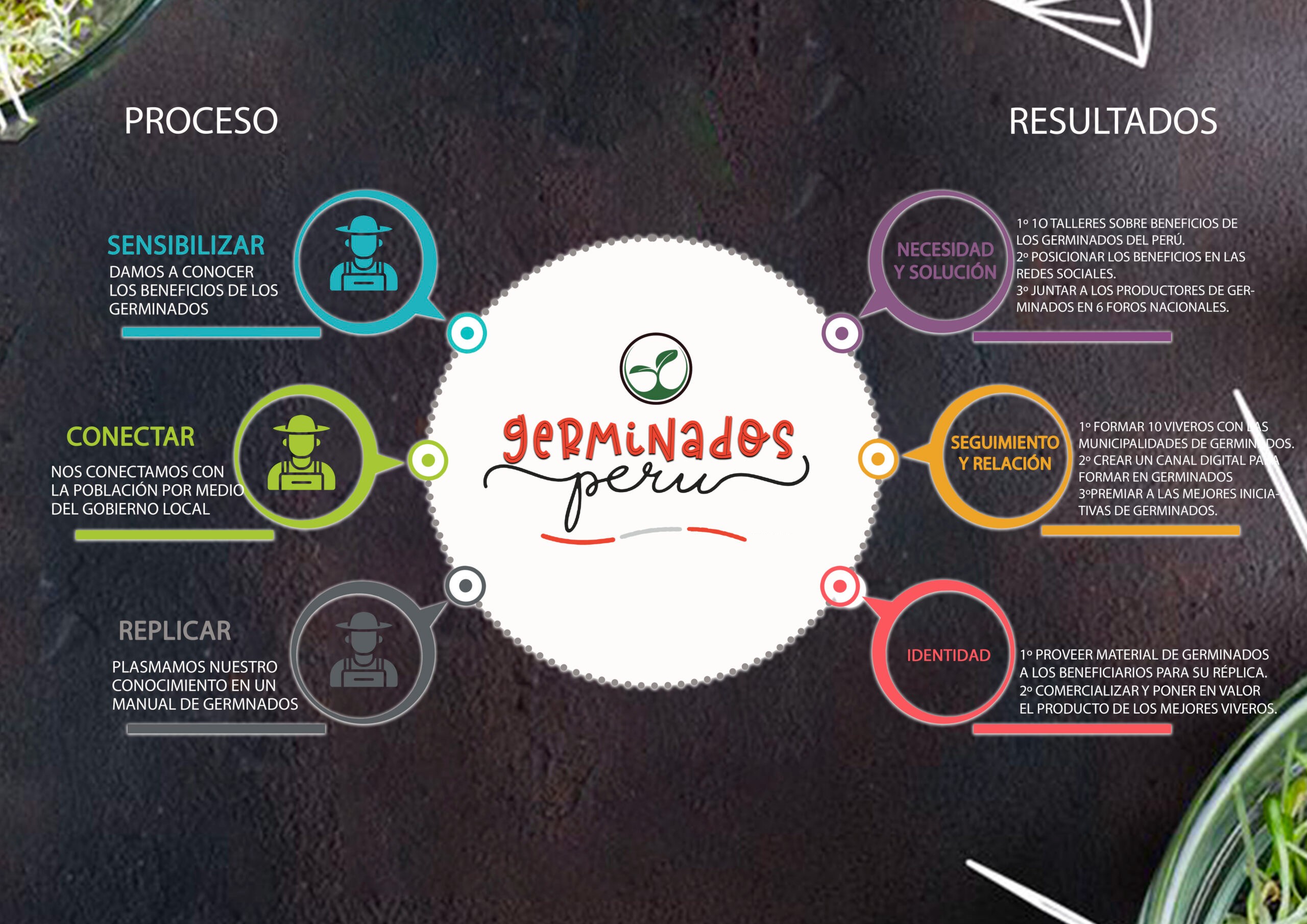
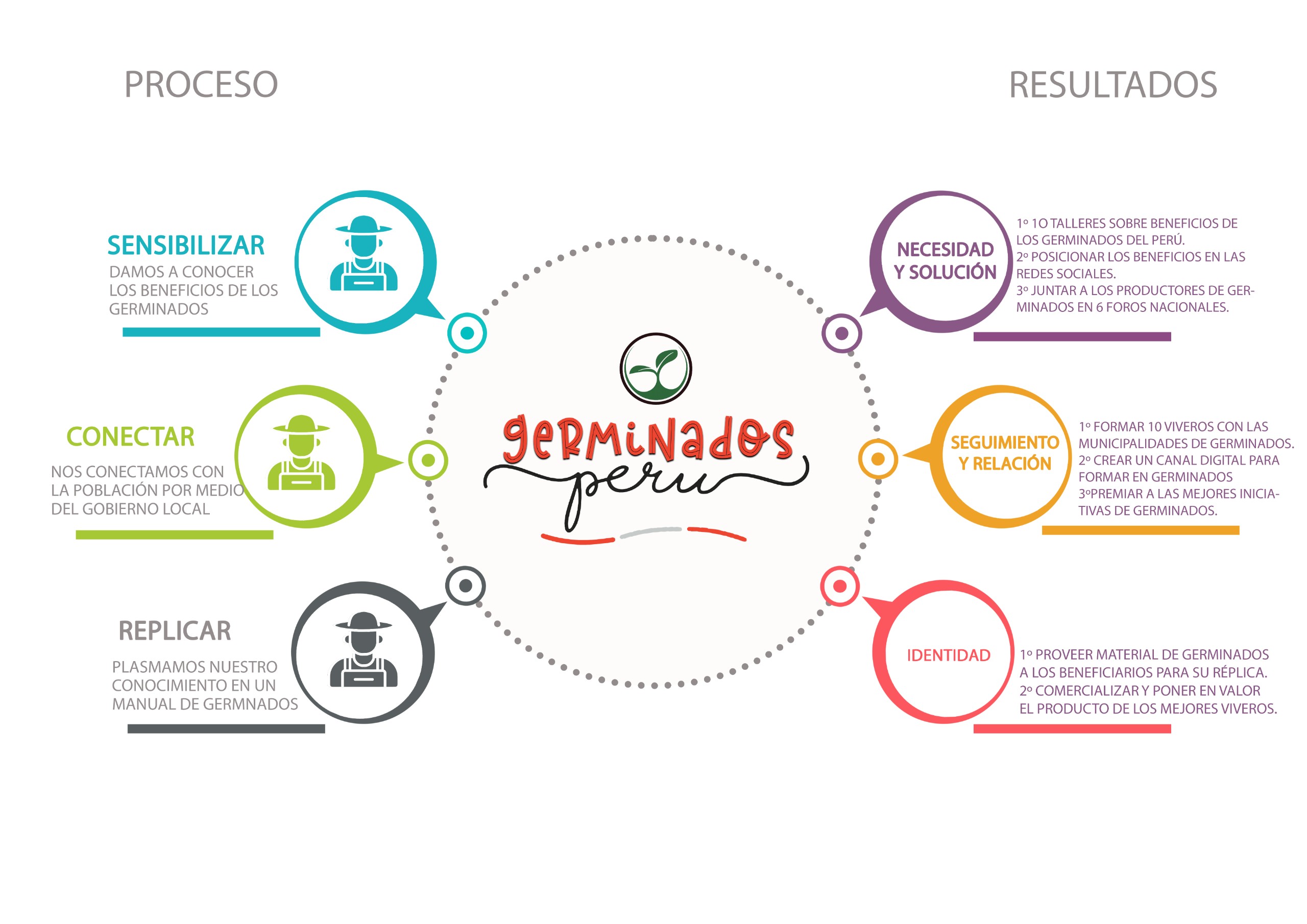
The Germinados Perú Project is a proposal for the sustainable development of farming communities through the «CREATION OF SPROUT NURSERIES WITH NATIVE PERUVIAN SEEDS», applying 5 processes:
1. RESEARCH AND ASSESSMENT:
At this stage we assess the areas of Peru where we can recover our country’s native seeds.
2. COMMUNITY AWARENESS:
Here we inform the population about the benefits of sprouts in Peru.
3. CONNECTION:
At this stage participants consolidate their involvement, also engaging the municipalities to which the communities belong.
4. SUSTAINABLE REPLICATION:
All communities start their own small-scale nurseries, and we provide them with the right tools to ensure the project’s sustainability.
5. FOLLOW-UP:
Ensuring sustainability requires constant follow-up to help communities keep going.
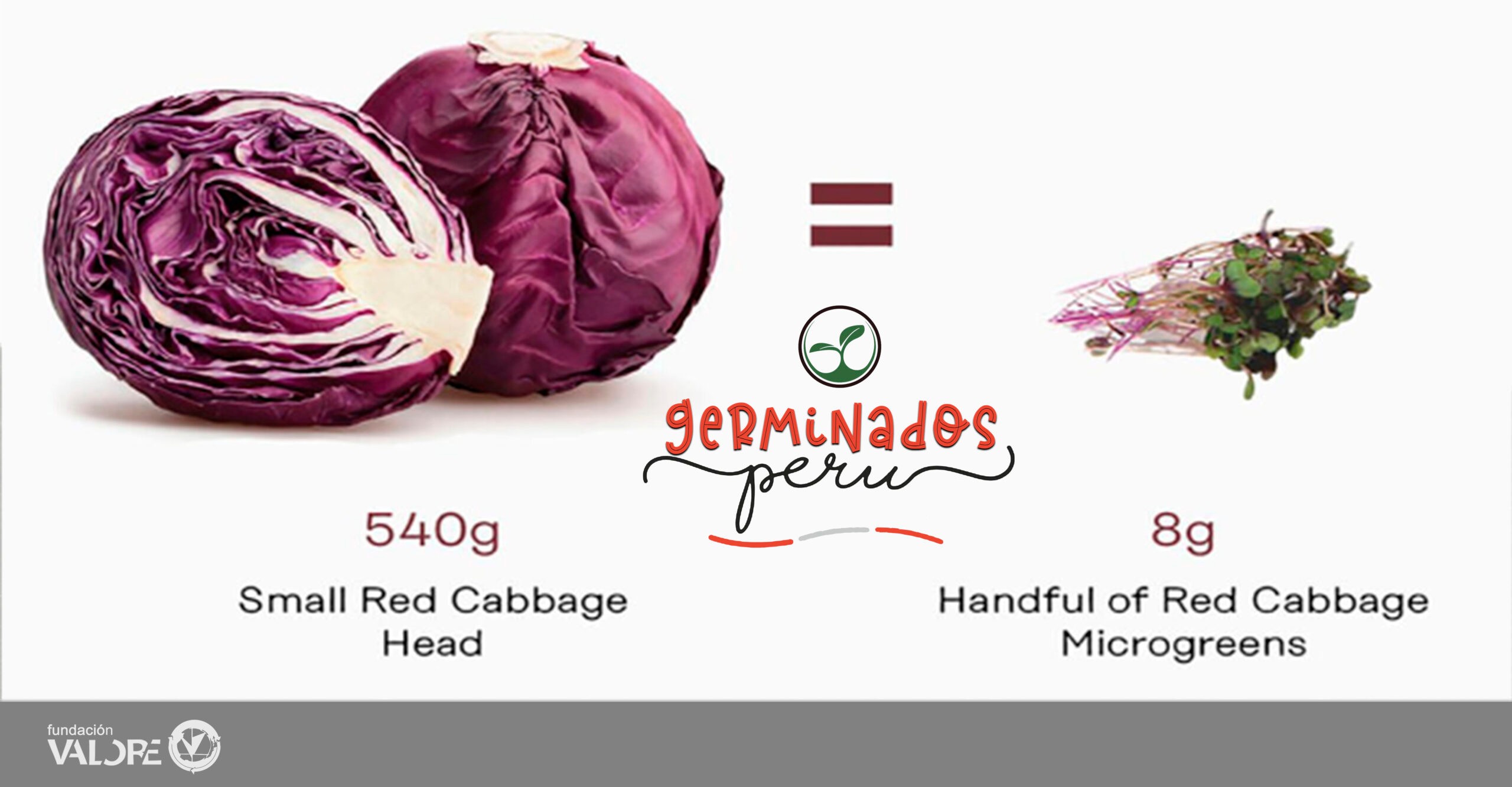
HIGH NUTRITIONAL VALUE: For example, red cabbage sprouts have 40 times more vitamin C, while cilantro sprouts have 3 times more beta-carotene.
Although SPROUTS are considered the food of the future, they come from an ancient
past; their origin dates back 5,000 years and is linked to many ancient cultures.
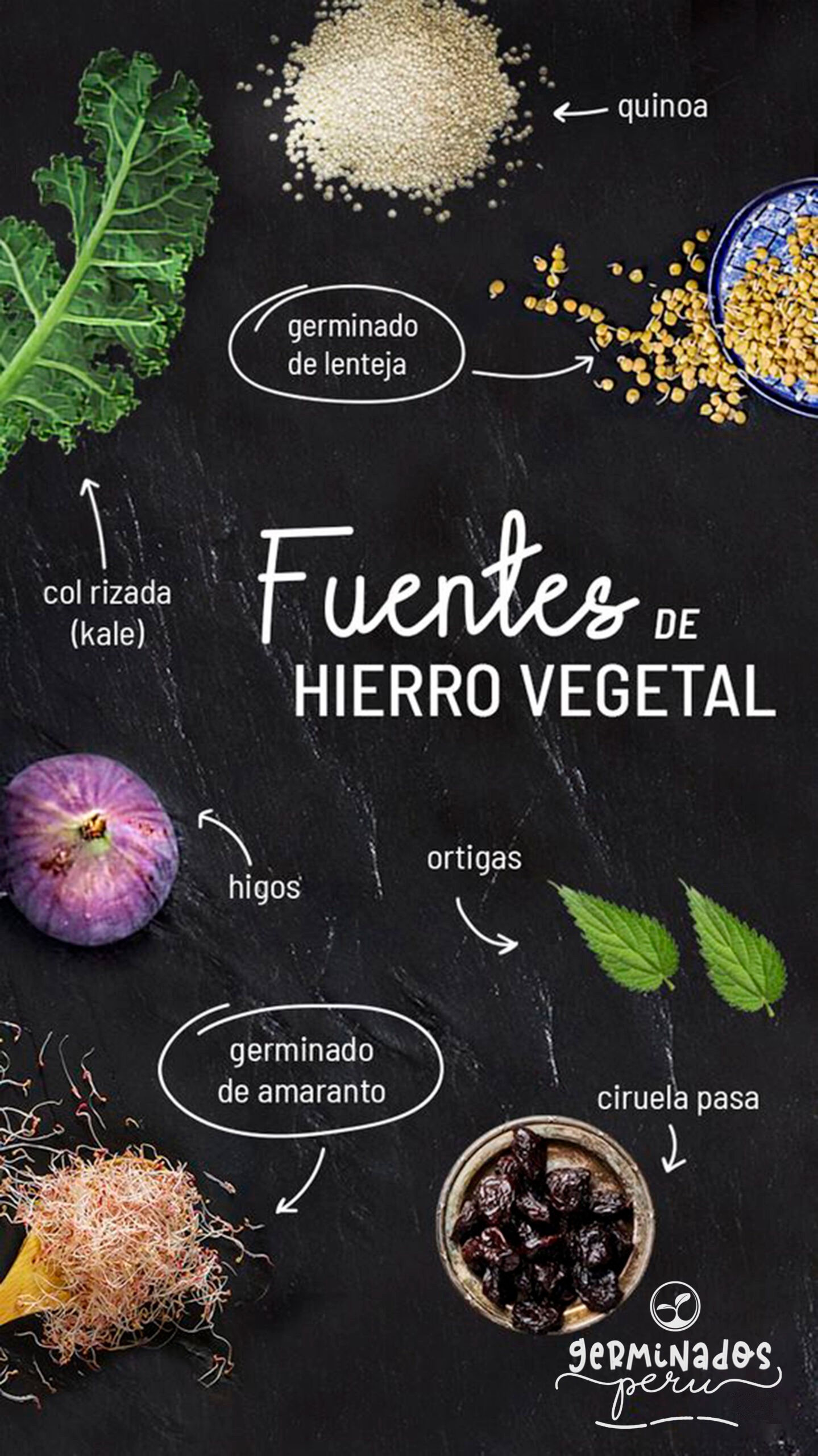
They have gradually regained prominence only since the 1980s. Like quinoa in our country, with its high iron content, suitable for reducing anemia among children in farming communities where it is not eaten.
The lack of iron in the body, known as iron-deficiency anemia, is one of the most common nutritional deficiencies in the world. Maintaining adequate iron levels in the body is vital, since iron is an essential part of the proteins that transport and store oxygen, such as hemoglobin and myoglobin.
Iron is present in many foods, but not all the iron in food is absorbed equally. In fact, it is estimated that only 10 to 15 percent of the iron we eat is absorbed by the intestine. But foods contain components that can help activate or inhibit iron absorption and can therefore control or worsen iron-deficiency anemia.
Quinoa
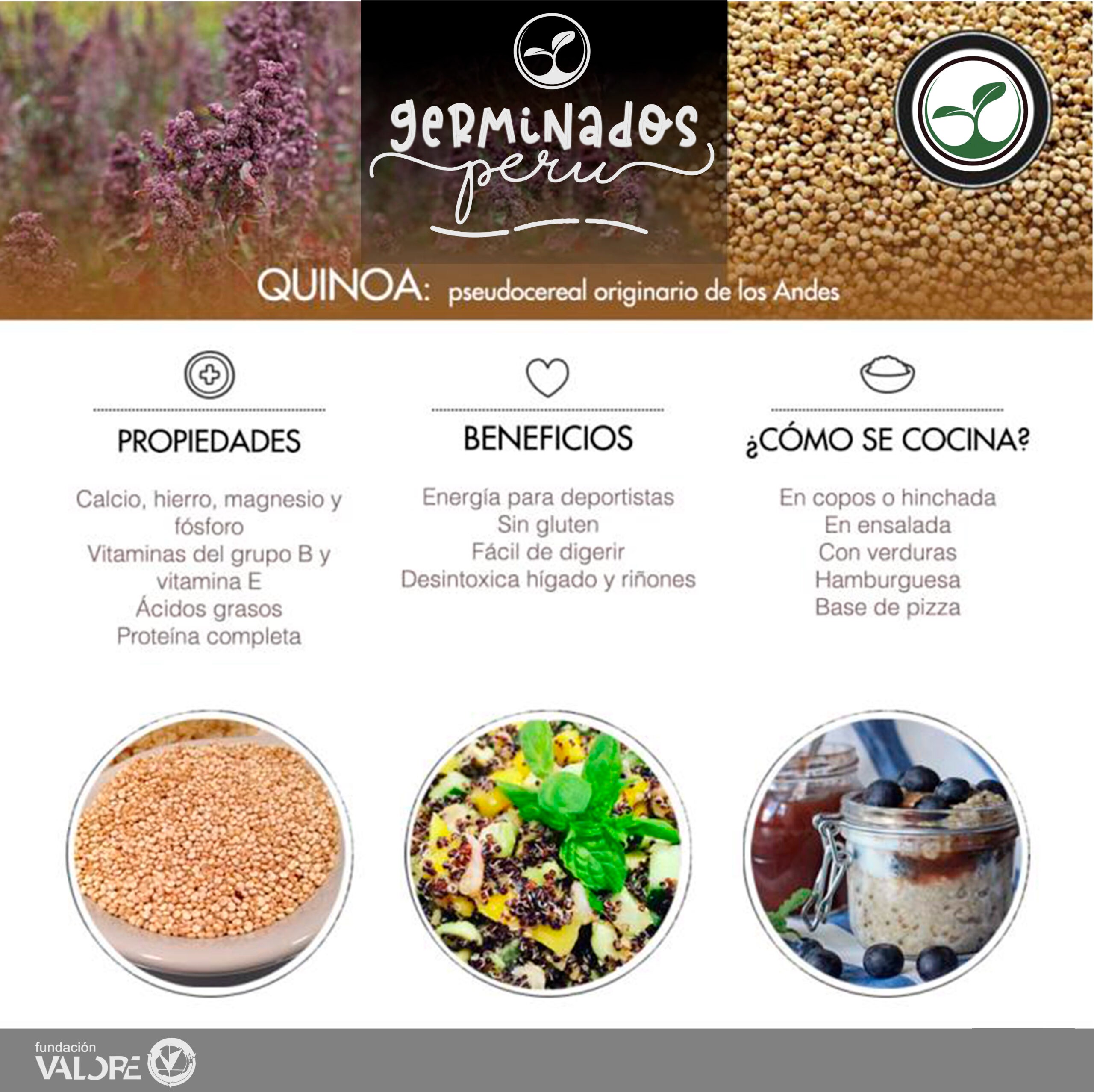
Quinoa is a highly nutritious pseudocereal, very useful for athletes, children or tired people who need an extra energy boost. It has complete protein, since it contains all the essential amino acids, and it is rich in minerals and vitamins. It is very versatile in the kitchen and very easy to digest.
WHAT ARE SPROUTS?
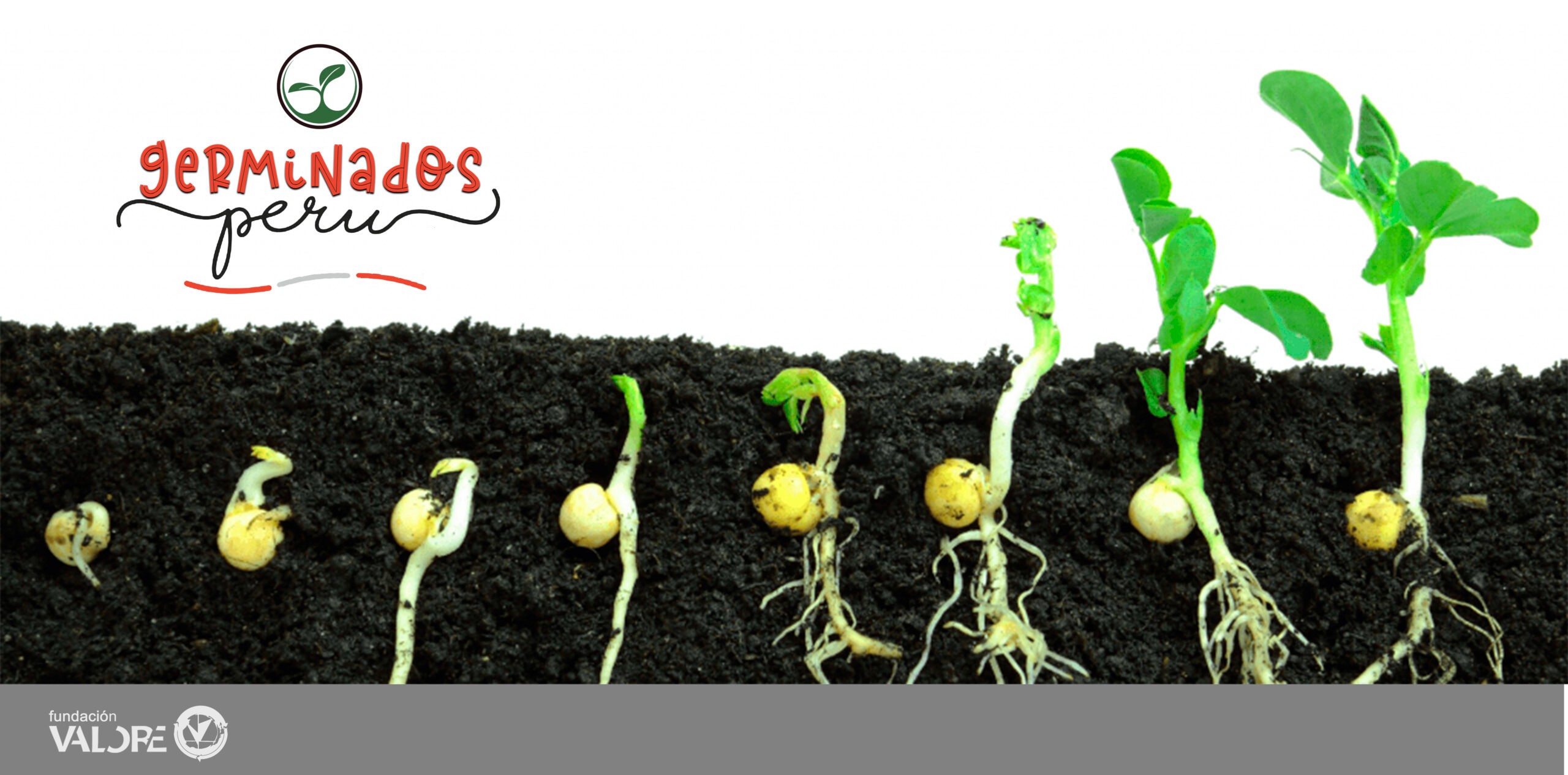
1. SPROUTS are SEEDS that have naturally begun to AWAKEN, and so start growing and multiplying their cells.
2. They are micro plants or micro vegetables in the process of germinating: in their first days of growth (4–21 days), with cotyledons present.
3. They are a LIVING food that keeps growing, obtained from WHOLE, NATURAL, ORGANIC untreated seeds.